A walk through Toronto’s public chess tables and regulars
Toronto’s public chess scene is easy to miss. It rarely announces itself with a sign or a tournament banner. Instead, it appears as a pair of stone tables in a park, a folding board beside a café, or a familiar cluster of players who seem to know exactly when the weather will turn.
For visitors from Sydney, Melbourne, Brisbane or Perth, the city’s chess tables offer a useful way to read Toronto at street level. The game fits neatly into local habits: a coffee after work, a long weekend walk, a conversation with a stranger and the willingness to spend an afternoon outdoors when the temperature allows it.
The locations shift with seasons, construction and neighbourhood routines, so this is best treated as a living map rather than a fixed directory. Bring a board, check the condition of the tables and expect the most reliable games to come from the people who return regularly.
Nathan Phillips Square and the downtown circuit
Nathan Phillips Square is a natural starting point. Its open design, central location and steady flow of office workers make it one of the easiest places to look for a public game. The tables may be occupied by commuters taking a short break, older players who have made downtown part of their daily circuit, or visitors testing a new opening against someone they have just met.
From here, a chess walk can continue through the civic centre toward cafés and public libraries. The area is particularly good for observing different playing styles. Some players arrive with clocks and notation books, while others carry a small magnetic set in a backpack and play from memory.
Downtown tables also reflect Toronto’s practical relationship with public space. A game has to share room with lunch breaks, performances, demonstrations and street photography. Players who want a quiet match generally choose the morning, while late afternoon brings more spectators and spontaneous challenges.
Kensington Market and nearby park tables
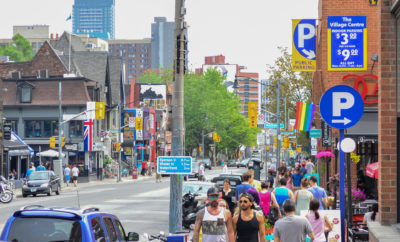
Kensington Market does not have a single chess identity in the way a dedicated club might, but its pedestrian energy makes it a useful part of the map. Look around the edges of the market, community spaces and nearby parks for players using portable boards. The setting suits fast games, friendly trash talk and interruptions from people stopping to watch.
The neighbourhood’s mix of food stalls, vintage shops and independent art spaces adds another layer to the outing. A visitor can move from a game to a snack, then follow the city’s creative trail through pop-up art galleries in repurposed storefronts. Chess becomes one stop in a broader afternoon rather than the only destination.
Regulars here tend to be socially flexible. They may play three-minute games while waiting for friends, switch to longer matches when the pavement quietens, or explain a position to a passer-by. The unwritten rule is simple: ask before touching a piece and accept that a public board belongs to the next player once a game ends.
Trinity Bellwoods and the west-end players
Trinity Bellwoods Park is a strong west-end waypoint, particularly on warmer weekends. The park attracts dog walkers, sports groups, families and people carrying coffee, so chess tables sit within a much wider neighbourhood rhythm. Portable boards are common, especially when permanent furniture is busy or weathered.
The west-end regular is often recognisable by routine rather than appearance. One player arrives early with a thermos, another appears after a shift in hospitality, and a third drifts over after meeting friends nearby. They may not belong to the same club, yet repeated games create a small social network with its own rivalries and running jokes.
For Australian readers, the atmosphere may feel familiar in Melbourne’s inner suburbs, where public parks and cafés function as informal meeting rooms. Toronto adds harsher seasonal limits: a sunny day in April can bring a sudden crowd, while a cold snap can empty the tables within hours.
Christie Pits and the neighbourhood route
Christie Pits Park is useful as part of a broader route through the west and central neighbourhoods. Its open lawns and transit access make it easy to combine with a walk along Bloor Street. Chess activity can be intermittent, so the best approach is to look for players rather than expect a permanent gathering every day.
This is where the map becomes more about timing than geography. Saturday afternoons can produce casual games among teenagers and students, while weekday mornings may favour retirees and independent players. A folding board allows regulars to relocate when a sports game, festival or crowded picnic takes over their preferred table.
The park also demonstrates why public chess remains valuable. It costs nothing to watch, requires little equipment and creates a low-pressure way for newcomers to enter a neighbourhood. Someone who would hesitate to join a formal chess club can still ask for a game while waiting for a friend.
The regulars, from speed players to patient teachers
Every public chess table develops recognisable characters. There is usually a speed player who resets the board immediately, a patient teacher who explains why a move failed, and a quiet tactician who says very little until the position becomes complicated. Their skill levels vary, but regulars often remember previous games and notice when a newcomer improves.
Money should not be assumed to be part of the scene. In Australia, gambling regulation is handled through state and territory laws, and a casual chess game without wagering sits differently from a betting activity. The same sensible rule applies in Toronto: keep public games friendly, avoid stakes and follow the park’s posted requirements.
Toronto’s parks are governed by municipal rules covering conduct, commercial activity and use of public facilities. A casual board is unlikely to cause trouble, but organised tournaments, amplified promotion or paid instruction may require permission. Players who want to build a regular event should check with the relevant council or park authority before advertising it widely.
How to follow the map through the seasons
A practical chess map should include transit stops, nearby toilets, cafés, shade and indoor alternatives. Toronto’s subway and streetcar network makes downtown, Kensington Market, Trinity Bellwoods and Christie Pits relatively easy to connect, although winter conditions can turn a short walk into a serious decision.
The most dependable season runs from late spring into early autumn. Summer brings longer evenings, but heat, humidity and sudden storms can affect concentration. Someone used to Brisbane’s summer will understand the need for water and shade; someone from Melbourne will recognise the habit of checking the forecast before packing a board.
The city’s local market also shapes the experience. Independent cafés, food counters and neighbourhood shops provide natural breaks between games, while free community events can unexpectedly make a quiet table busy. For wider neighbourhood guides, event listings and local culture, the 416 Mag city guide is a useful companion to a chess walk.
Start with Nathan Phillips Square, carry a compact board, ask before joining an occupied table and treat each location as a meeting point rather than a guaranteed fixture. The best map is the one updated by observation: note who plays, when they return and which public spaces still leave room for one more game.