How the Waterfront’s Public Art Changes Season by Season
Toronto’s waterfront is a living gallery shaped by weather, light, migration and movement. Along the harbour, public artworks share space with cyclists, ferry passengers, joggers, families and visitors taking photographs beside Lake Ontario. The same installation can feel playful in July, stark in November and almost theatrical beneath winter snow.
This seasonal shift gives the waterfront a character that indoor galleries cannot easily reproduce. Sculptures become landmarks for daily routines, murals change under different skies, and temporary installations respond to festivals, waterfront markets and community gatherings. Art here is part of the city’s public rhythm rather than something separated from it.
For Australian readers, the experience may recall walking beside Sydney Harbour, discovering a Melbourne laneway mural or visiting an outdoor sculpture park in Canberra. Toronto offers a different atmosphere: broad lake horizons, sharp seasonal contrasts and a shoreline where art reflects both the city’s urban density and its relationship with water.
Spring brings movement back to the shore
As the ice recedes and daylight stretches into the evening, the waterfront begins to fill again. Public art that seemed quiet through February becomes part of a busier streetscape, framed by blossoming trees, returning cyclists and the first outdoor food vendors. Reflections on wet pavement can give polished metal, glass and painted surfaces a brighter, more animated appearance.
Spring is also a season of renewal for Toronto’s cultural calendar. Community festivals, walking tours and design events encourage people to stop and look rather than simply pass through. An installation beside the harbour may become a meeting point for a school group in the morning and a photo backdrop for visitors in the afternoon.
The cooler air can make smaller details easier to notice. Textures, engraved words and layered materials stand out without the glare of midsummer sun. Visitors used to Australia’s spring, when cities such as Brisbane and Perth move quickly towards warmer outdoor living, may find Toronto’s spring more gradual and changeable.
Summer turns artworks into social spaces
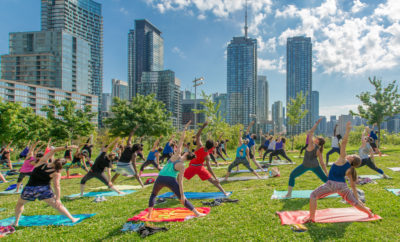
Summer gives the waterfront its greatest concentration of activity. Patios open, music carries across the promenade and public squares become informal stages. Artworks are encountered alongside street performers, pop-up retail, food trucks and people gathering before a Blue Jays game or a night out in the Entertainment District.
Long evenings alter the way installations are seen. A sculpture can appear completely different at sunset, while lighting projects and illuminated works draw attention after dark. Families often experience the shoreline as a free cultural destination, combining a walk, a picnic and a visit to an installation without needing a formal itinerary.
The season also brings a strong visitor economy. Australians planning a Toronto trip may recognise the appeal of a waterfront stroll after the kind of warm-weather day commonly spent around Circular Quay or Melbourne’s Southbank. Toronto’s summer public art offers a similar sense of civic theatre, although the lake breeze can arrive suddenly and make a light jacket worthwhile.
Autumn adds colour, memory and texture
By September, the waterfront becomes less crowded but more visually layered. Lower sunlight warms brick, timber and weathered steel, while changing leaves create a natural frame around permanent sculptures. The shoreline’s palette moves from bright summer colour towards rust, amber and deep blue.
Autumn also suits artworks concerned with memory, place and change. Seasonal transitions make visitors more aware of time: an installation may commemorate a local history, mark a former industrial site or invite reflection on the lake’s ecological future. The art feels connected to the city’s wider story rather than simply decorative.
This is a rewarding period for photographers and walkers. The cooler conditions make longer routes comfortable, and the changing light creates strong contrasts between Toronto’s skyline, working harbour and public spaces. It is a different kind of urban experience from an Australian autumn market, where warmth often remains central; here, the season encourages slower observation.
Winter reveals the structure beneath
Winter strips the waterfront back to its essential forms. Bare trees, pale skies and frozen edges expose the geometry of sculptures and the scale of promenades. Snow can soften rough surfaces, while wind and ice emphasise the toughness of materials chosen for outdoor display.
Some works become especially powerful in this environment. Bright colours stand out against monochrome surroundings, and abstract forms can resemble fragments of ice, boats or industrial equipment. Visitors may encounter fewer crowds, giving familiar locations a more contemplative atmosphere.
Winter access requires practical planning. Warm footwear, gloves and attention to wind chill matter, particularly for travellers accustomed to Sydney’s milder cold or Adelaide’s dry winter. A short route linking several installations is often more enjoyable than attempting to cover the entire shoreline in one outing.
Making a year-round art walk
The best way to understand Toronto’s waterfront art scene is to revisit it. A familiar sculpture changes as trees grow around it, nearby construction shifts the sightlines or a temporary work appears in a previously quiet plaza. Local coverage from Toronto arts coverage can help visitors connect exhibitions and neighbourhood events with the broader city calendar.
Public art is also easier to appreciate when approached as part of a wider day out. Pair a walk with a market, café stop, ferry ride or visit to a nearby cultural venue. The waterfront rewards flexible plans because weather, light and temporary programming can transform the experience within a few hours.
Practical ways to experience the shoreline
- Visit in the late afternoon to see the same work in daylight and at sunset.
- Check local event listings for temporary installations, guided walks and public performances.
- Wear footwear suited to uneven paving, long promenades and changing weather.
- Photograph artworks from several distances, including the skyline and lake behind them.
- Return in another season to compare colour, crowds, shadows and surrounding plant life.
- Combine the art walk with a waterfront market or neighbourhood food stop.
- Leave room for unplanned discoveries rather than following a rigid route.
The waterfront’s strongest quality is its ability to make public art feel immediate. No ticket, gallery etiquette or specialist vocabulary is required; the work meets people during ordinary routines and changes with the city around it. For a visitor from Australia, that makes Toronto’s shoreline a useful way to read the city through climate, design, history and everyday behaviour.
On your next Toronto visit, choose one waterfront installation and photograph it once in daylight and again after sunset, recording the season and weather beside each image.