Inside a Parkdale Textile Studio Where Denim Gets Repaired by Hand
On a quiet Parkdale side street, a small textile studio turns worn jeans into useful clothing again. The room smells of cotton, hot iron and machine oil, while shelves hold thread cones, salvaged pockets and denim in shades ranging from pale summer blue to deep indigo. Every repair carries evidence of the person who wore it: a softened waistband, a frayed hem, a pocket shaped by years of use.
For Australian readers used to Melbourne mending circles, Sydney makers’ markets and the practical appeal of a good op-shop find, the studio offers a fresh way to think about clothing care. This is slow fashion at street level, grounded in Toronto’s west-end neighbourhoods and built around the simple idea that a favourite pair of jeans deserves more time.
Parkdale’s Hands-On Repair Culture
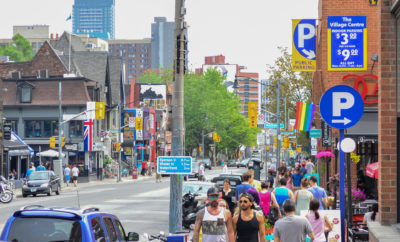
Parkdale has long attracted independent designers, artists, musicians and small creative businesses. Its mix of Victorian homes, busy Queen Street West shops and apartment buildings gives the neighbourhood an informal, workshop-like energy. A textile studio fits naturally into that landscape, especially as local residents look for alternatives to replacing garments whenever a seam gives way.
The work begins with an assessment rather than a sales pitch. A repairer checks the weight of the denim, the location of the tear and the strain placed on the surrounding fabric. A split crotch needs a different treatment from a frayed hem, while a pocket corner may require reinforcement before the damage spreads. Readers exploring Toronto’s independent culture can find more neighbourhood stories through 416 Mag, a useful guide to the city’s local character.
There is also a social element to the practice. Customers often arrive with stories about where their jeans have travelled, from construction sites and bike commutes to concerts and weekend walks along Lake Ontario. The garment becomes a record of ordinary life rather than a disposable product.
What A Hand Repair Looks Like
The repairer places the jeans flat beneath a bright task lamp, then turns the damaged area inside out. Loose threads are trimmed carefully, but the original wear is preserved. Matching the exact colour is rarely the goal; a close shade can make the mend feel intentional, while a contrasting thread can give the garment a visible piece of personality.
For thin areas, the studio may add a backing patch behind the denim before stitching across it in rows. This technique stabilises the fabric without making it stiff. On heavier workwear, a darning foot can create a dense web of thread that closes the hole while allowing the cloth to flex. Hand-finishing around the edges helps prevent new tears.
The pace is slower than sending jeans through an industrial production line. That slowness is part of the value. Each pair receives decisions based on its construction and the customer’s habits, rather than a standardised fix designed for speed alone.
Materials That Keep Denim In Use
A well-equipped repair bench contains surprisingly little: sharp scissors, chalk, seam rippers, needles, thread, an iron and a reliable sewing machine. The important materials are often reclaimed. Offcuts from old jeans can become internal patches, and unwanted garments can supply buttons, belt loops or strong sections of cloth.
This approach has clear relevance in Australia, where repair cafés and community sewing groups are increasingly familiar in cities such as Melbourne and Brisbane. A person visiting a Sunday makers’ market may find handmade alterations alongside ceramics and baked goods, while an op-shop shopper in Adelaide or Perth can choose second-hand denim knowing that minor flaws are repairable.
The climate also influences clothing habits. In a hot Australian summer, lightweight denim and shorts may see more use than heavy jeans, while Toronto’s cold winters demand sturdy layers and durable trousers. The underlying lesson remains the same: garments last longer when repairs respond to how people actually wear them.
Useful Details To Notice In The Studio
- Repeated stitching can show where the fabric needs extra support
- A hidden patch protects the inside without changing the outer appearance
- Reused denim often blends better after several washes
- Bar tacks strengthen belt loops and pocket corners
- Natural fading can guide the colour of a visible repair
The Cost And Value Of Mending
Pricing varies according to the damage, fabric and time involved. A simple hem is straightforward, while a torn knee or weakened seat may require careful reinforcement across a wider area. In Toronto, customers may compare the repair cost with the price of replacing jeans, yet that calculation leaves out comfort, fit and the environmental cost of manufacturing another pair.
Australian shoppers will recognise a similar conversation around the local market. A pair of quality jeans can be expensive in Australian dollars, especially after GST and shipping, while fast-fashion alternatives often appear cheap until their seams fail. Paying for an alteration from a local maker can be a practical choice when the garment fits well and has already become part of a regular wardrobe.
Mending also avoids the pressure to make every repair invisible. Some customers request a discreet patch, while others prefer sashiko-inspired lines, bright thread or a deliberately obvious contrast. The result can look closer to personal customisation than damage control.
Denim As A Record Of City Life
A pair of jeans repaired in Parkdale may eventually travel far beyond Toronto. It could be worn through a wet Melbourne winter, packed for a road trip from Sydney to the Blue Mountains or carried in a backpack on a tram across the city. Every repair adds another layer to its history, connecting the maker’s hands with the wearer’s everyday routines.
That sense of continuity mirrors other community-minded Toronto spaces. The story of the Regent Park Aquatic Centre shows how a practical local facility can become a meeting place, and a repair studio works in much the same spirit at a smaller scale. It provides a service, but it also creates a point of contact between neighbours, makers and people trying to consume with greater care.
Signs Of A Repair Worth Keeping
- The fabric around the mend remains flexible when worn
- The stitching follows the garment’s stress points
- The repairer explains how to wash and maintain the jeans
- The original shape and fit are preserved
- The finish feels suited to the owner’s style
The studio’s quiet work challenges the idea that clothing must look untouched to be valuable. A visible patch can mark a thoughtful choice, while a subtle reinforcement can extend the life of a well-loved staple without drawing attention. In both cases, the repair respects the garment’s existing story.
For anyone visiting Toronto from Australia, Parkdale offers a close-up view of the city’s creative economy: practical, local and shaped by individual relationships. The lasting lesson is simple: denim becomes more valuable when its wear is treated as history, and a careful repair can keep that history in motion.