How Toronto’s Flea Markets Are Becoming Circular Economy Hubs
On a busy Toronto weekend, an empty lot can fill with folding tables, patched coats, mismatched chairs, old vinyl and people looking for a second life. What began as a low-cost way to clear a cupboard is becoming a testing ground for repair, resale, swapping, upcycling and material recovery. The market keeps usable goods nearby instead of sending them straight to curbside collection.
For shoppers, the attraction still includes a bargain and the chance to talk to the person who repaired or remade an item. For organizers, the deeper opportunity is to connect small services: a repair table, a clothing swap, a food stall and a place to donate unsold goods. That network can shorten the journey from owner to next owner while making a temporary event feel like neighborhood infrastructure.
From resale stalls to circular infrastructure
Flea markets have long captured a basic urban need: a place where unwanted possessions meet people who can use them. Circular-economy organizers add another layer by treating every object as a chain of materials and decisions rather than a one-time commodity. A wooden chair may be refinished, a shirt patched, a toaster tested, or a bag returned to a maker for another use. Selling is only the final handoff in a longer life.
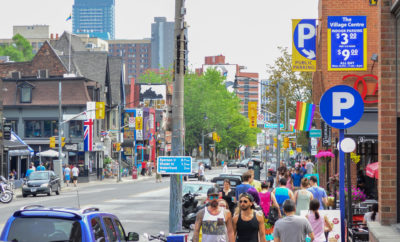
Toronto’s dense neighborhoods—from Queen West and Kensington Market to Parkdale—make this model useful, but they also expose its limits. Outdoor markets need predictable weather plans, affordable stall fees and safe loading areas, while winter calendars move activity indoors. Successful hubs therefore borrow from libraries, community centers and small businesses: they combine transactions with trusted information, repair skills and convenient access to transit.
Repair resale and swap are the core
Toronto’s sustainable fashion initiatives already demonstrate how clothing swaps and repair events can combine community participation with waste reduction. Flea-market organizers can extend that work by offering timed mending stations, textile recyclers and take-back points for unsold pieces. These services turn a shopping trip into a practical lesson in how clothing value can be preserved.
At a well-run stall, provenance and condition matter. Sellers should state whether an item works, has been repaired or carries cosmetic wear, while buyers can ask about materials, age and replacement parts. Repair cafés also create social value: retirees, hobbyists and younger customers share techniques, and a broken appliance or garment leaves the table with a future rather than becoming immediate waste.
Swaps add another layer because they exchange use without requiring money, although organizers need clear rules for hygiene, deposits and insurance. Digital wish lists, timed tables and text-message reminders can reduce no-shows. The strongest circular hubs track these outcomes rather than relying on a slogan: items diverted, repair orders completed, materials recovered and dollars retained within the neighborhood.
The market as a neighborhood gathering place
A flea market also changes how a street feels. Temporary stalls bring conversation, children’s activities and visible reuse into spaces that can otherwise sit empty, while nearby cafés and transit riders gain foot traffic. City planners can see the same activation logic in Toronto pickleball leagues, where regular play turns park edges into lively community meeting places.
That social function matters in a city shaped by newcomers and many languages. Vendors can act as informal connectors, directing visitors to food businesses, public libraries and neighborhood associations. Accessible tables, seating and clear pricing help prevent a sustainability event from becoming exclusive, while public toilets, waste stations and safe crossings turn a market into a credible civic destination.
Practical roles for Australian flea markets
For Australian readers, the most useful comparison is not whether a market looks like Toronto’s, but whether it performs the same practical roles. Two short checklists capture those roles without turning a day out into an environmental lecture.
-
Repair before resale: Stallholders can test working items, document faults and price labor clearly.
-
Record honest condition: Sellers should distinguish original, restored and upcycled work.
-
Coordinate local services: Markets can pair stalls with tailors, fixers, cafés and transit information.
-
Plan for leftovers: Donate or collect unsold goods before dismantling the market.
-
Start with a repair need: Shoppers can compare repair costs with replacement before browsing.
-
Buy for actual use: Choose quality and fit over novelty, especially for fast-changing trends.
-
Keep value circulating: Swap equipment, preserve packaging and pass useful tools to another household.
-
Ask and share: Request care details and exchange practical knowledge about maintaining goods.
Australian cities already have relevant foundations. Sydney and Melbourne combine neighborhood flea stalls with cafés, rail corridors and strong op-shop networks, while residents routinely buy used books, repair small appliances and circulate children’s equipment through community buy-and-swap groups. Saturday markets such as Sydney’s Rosehill Flea Market and rotating vintage events in inner Melbourne show how social browsing and circular buying can coexist. Policy adds useful guardrails. Under the Australian Consumer Law, claims such as “waste-free” or “fully circular” must be accurate and not misleading. State producer-responsibility schemes for packaging, and NSW’s single-use plastic rules that began in July 2023, encourage reusable systems that fit market-day habits instead of adding another disposable stream.
Measuring circular impact without greenwashing
Impact should be visible in operating data and not left to promotional language. For each edition, organizers can record the weight of goods kept in use, the number of repairs, local spending, transport choices and materials sent for recycling. A city guide such as 416 Mag can situate these events within Toronto’s wider culture, food and community economy, but organizers still need to publish their own numbers.
Measurement also prevents a common error: counting every item sold as a tonne of emissions avoided. Some goods would have been donated or reused anyway, while transport, refrigeration and stall materials create impacts. A credible account separates reuse from waste diversion, reports expenses and asks whether lower-income buyers can trade without carrying disproportionate costs.
The practical takeaway is a simple market-day habit: carrying one repair need, buying only what will be used, choosing the option with less packaging and taking home a skill that keeps another item in circulation.