Toronto’s Older Subway Stations Are Full Of Quiet Design Details
Toronto’s subway system is often treated as a quick way to move between neighbourhoods, yet its earliest stations preserve a visual record of the city’s postwar growth. Behind advertisements, service notices, and busy platform crowds are bands of ceramic tile, geometric borders, glazed surfaces, and carefully proportioned walls that reward a slower look.
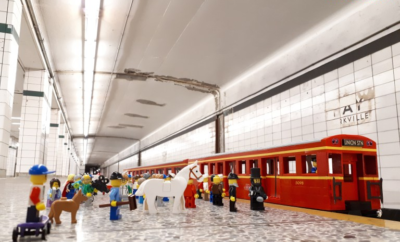
The original Yonge line opened in 1954, followed by the first University line several years later. Their stations were built with a practical modernist vocabulary: durable materials, restrained colour, clear signage, and finishes designed to withstand thousands of daily commuters. That functional approach created a distinctive underground atmosphere that still shapes the TTC experience.
A self-guided ride through the older subway corridors can feel like an architectural walk through Toronto. It also offers an easy way to connect transit history with the cafés, markets, galleries, and neighbourhood streets above ground.
Why The Early Stations Look So Distinctive
Many of Toronto’s first subway stations relied on ceramic wall tile and glazed brick because these materials were easy to clean, resistant to moisture, and durable under heavy use. Their glossy surfaces caught fluorescent light, making platforms feel brighter before the system adopted the larger variety of public art seen today.
The design language was deliberately calm. Repeated horizontal courses, narrow contrasting strips, and simple colour fields gave each station a recognizable character without overwhelming the signs or maps. In an era when subway design was strongly associated with efficiency, decoration was often folded into the building materials themselves.
Look closely at corners, stairwells, and the edges of platforms. Some of the most interesting details are not large murals but transitions between tile colours, rounded trim, ventilation grilles, and the way older surfaces meet later renovations.
A Slow Ride Along The Original Yonge Line
The stations between Union and Eglinton provide some of the clearest examples of early TTC interiors. Union, King, Queen, Dundas, College, Wellesley, Bloor, and Yonge were planned as part of the city’s first major underground spine, and each reflects the practical optimism of mid-century Toronto.
Queen and King are especially rewarding for visitors interested in the relationship between transit and downtown commerce. Their subdued wall finishes contrast with the busy streets above, where historic storefronts, office towers, restaurants, and laneways create a very different visual rhythm. A coffee stop or work session nearby can easily become part of the excursion; Toronto co-working cafés offer a natural way to extend the day beyond the station platform.
Bloor-Yonge shows how the original system evolved as ridership increased. Older materials remain visible alongside additions, renovations, and modern wayfinding. That layering is part of the appeal: the station is less a preserved period set than a working piece of infrastructure carrying several generations of design.
Tile, Colour, And The Human Scale
Tile work can make a large underground space feel more intimate. Repetition establishes a steady visual rhythm, while colour bands help break up long corridors and identify changes in circulation. Even when the palette seems neutral, the variation in sheen and grout lines adds texture that is easy to miss while rushing for a train.
The older stations also reveal a different approach to ornament. Rather than placing art in a separate frame, designers used walls, columns, and entrances as the finished surface. This approach connects Toronto’s subway interiors to civic buildings, department stores, and public schools of the same period.
| Station Area | Details To Notice | Best Viewing Moment |
|---|---|---|
| Union | Older wall finishes, layered renovations, strong civic scale | Midday, when natural light reaches the entrances |
| King and Queen | Repeated tile courses and compact platform proportions | Outside rush hour |
| College and Wellesley | Colour changes, trim, and older corridor details | During a slow transfer or exit |
| Museum | Distinctive columns and archaeological references | When the platform is less crowded |
| St George | Connections between older architecture and later art | On a transfer between lines |
| Dupont | Integrated artwork and a more expressive station atmosphere | In the early afternoon |
Museum And The Art Of A Themed Station
Museum station is one of the best-known examples of Toronto subway design turning architecture into a visual attraction. Its platform columns were redesigned to reference objects associated with museums and ancient civilizations, including Egyptian, Greek, Aztec, and First Nations-inspired forms. The result is immediately recognizable, even to passengers who know little about transit architecture.
The station demonstrates how a practical space can develop a strong identity through scale and repetition. The columns create a procession along the platform, while the surrounding tile and lighting keep the artwork tied to the station rather than presenting it as an isolated gallery piece.
Museum also works as a gateway to several cultural destinations. The Royal Ontario Museum, Gardiner Museum, and Queen’s Park are close by, making it easy to combine an underground design walk with an afternoon exploring exhibitions, public buildings, and nearby cafés.
St George, Dupont, And Later Layers
St George station offers a useful contrast between the restrained finishes of the original network and the more expressive public art introduced in later decades. Its corridors and platforms show how Toronto’s subway has accumulated different design periods without losing the basic clarity of its older architecture.
Dupont is another notable stop for passengers who want to see artwork integrated into the station environment. Its visual treatment feels more atmospheric than the earliest stations, proving that the TTC’s art program can transform a transfer point into a destination. The effect is especially noticeable when the station is approached as a designed interior rather than simply a place to board a train.
From Dupont, the walk above ground opens into the Annex, Seaton Village, and nearby residential streets. A short detour can lead toward independent shops and food destinations, including the kind of curated urban eating spaces highlighted in Toronto’s innovative food halls.
Reading The Subway As A City Archive
Toronto’s station tile tells a story about municipal priorities. The emphasis on clean lines, robust materials, and legible circulation reflects a city investing in modern transportation while trying to make public architecture feel orderly and welcoming. Later additions reveal changing attitudes toward colour, cultural representation, and the role of art in everyday life.
The details also connect subway travel to neighbourhood history. At Union, the system meets the waterfront and downtown core; at Museum and St George, it intersects with major cultural institutions; farther west and north, stations lead toward residential districts with their own architectural identities.
A subway-focused outing can therefore become a compact city tour. Pair the underground route with a walk through Mimico’s shoreline streets using this guide to Mimico by the lake, or choose a station near a market, restaurant, or local event.
A Practical Way To Explore The Details
Plan the route outside peak commuting hours, when it is easier to pause without blocking stairs or platform access. A phone camera can help record patterns and textures, though station rules and the comfort of other passengers should always come first.
- Ride one line at a time instead of trying to see the entire system in a single outing.
- Begin with Museum, St George, Union, and Dupont for the widest range of architectural and artistic details.
- Look at entrances, stairwells, columns, and corridor corners, not just the centre of each platform.
- Pair two or three stations with a neighbourhood walk, café visit, or cultural stop.
- Check TTC service updates before setting out, especially on weekends or during planned closures.
The next time a train arrives, give the platform an extra minute. Notice the tile sheen, the repeated borders, and the evidence of repairs and renovations that show how long these spaces have served the city. Then follow the route above ground and let Toronto’s older subway design lead into a fuller exploration of its streets, businesses, and communities.